The Quiet Decline: What Decades of Farming Did to the Minerals in Our Food
Study after study points to the same pattern - the fruit and vegetables we eat today carry fewer trace minerals than those grown generations ago. The reason lies beneath our feet.
An orange in 1955 was not, chemically speaking, the same orange we buy today. Neither was a carrot, a spinach leaf or a punnet of strawberries. The visible fruit looks close enough. What has shifted, quietly and over decades, is the mineral content packed inside it.
This is not a fringe claim. It is one that agricultural scientists, nutrition researchers and soil chemists have examined repeatedly since the middle of the last century. The exact size of the decline is still argued over, and reasonable researchers land on different numbers. But the direction of travel is consistent across the literature: the trace-mineral density of many common fruits and vegetables has fallen, gradually and measurably, over the past several generations.
The reason is not mysterious, and it is not sinister. It is agricultural. To understand it, you have to stop thinking about the plate and start thinking about the ground.
Why the ground matters
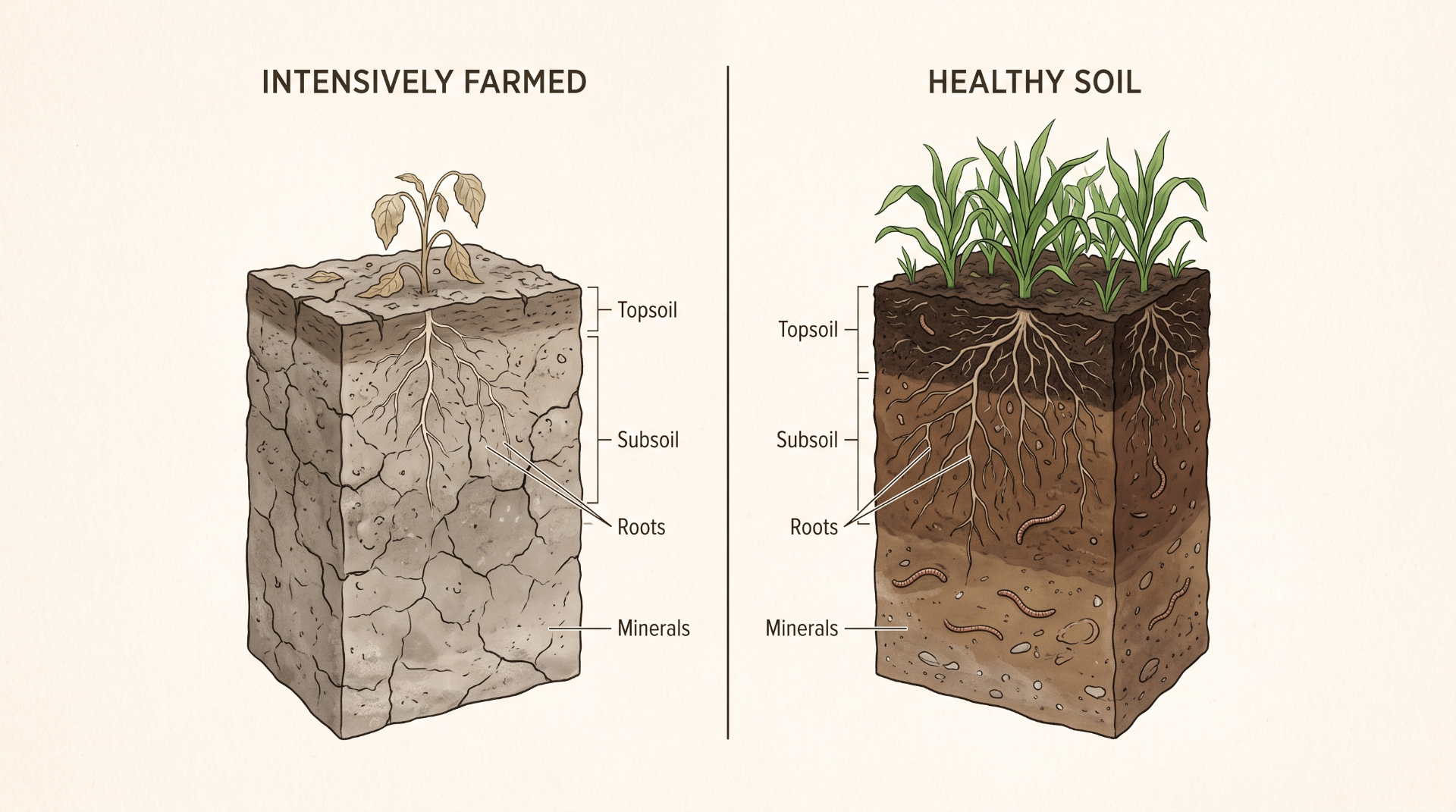
A plant is, in one sense, a chemistry set with roots. It draws water and dissolved minerals up through the soil, assembles them into leaf, stem and fruit, and delivers the finished product to whatever eats it. The catalogue of elements involved is long: not just the familiar nitrogen, phosphorus and potassium, but a background choir of trace minerals - zinc, magnesium, selenium, boron, manganese, copper, molybdenum and dozens more, most present in vanishingly small quantities but doing consequential work.
Intensive modern agriculture, with its monocropped fields, short rotations and reliance on synthetic fertilisers, is extraordinarily good at producing yield. It is less good at maintaining the full mineral spectrum of the topsoil it draws from. Standard fertilisers are formulated to replace what plants remove most heavily - typically nitrogen, phosphorus and potassium - and to do so cheaply. They are not designed to replace the wider palette of trace minerals a plant might otherwise take up if it were available.
Over years of repeated harvest, the arithmetic is straightforward. If a crop removes a broad range of minerals from the ground each season, and the fertiliser used to prepare the next season replaces only three of them, the balance drifts. Soil chemists have been describing this drift, in one form or another, for the better part of a century.
What this means for the plate
If the ground carries fewer trace minerals, the food that grows in it can only carry so many. A tomato drawn from mineral-poor soil is still a tomato - it still has flavour, still has water, still has vitamins the plant manufactures itself - but the trace-mineral figures printed in older nutrition tables are, by many analyses, not quite the figures you would get from the same tomato today. A person eating a completely sensible and varied diet may, on paper, still be taking in a slightly narrower spectrum of minerals than the same diet would have delivered several decades ago.
What this means for human health is a separate question, and a much harder one. The scientific literature on that question is genuinely mixed, and this article is not the place to settle it. Nothing here should be read as medical or nutritional advice. The narrower point - that soil composition shapes food composition - is the one on firm ground.
Putting minerals back
Given the pattern, one line of thinking in agricultural and nutrition research has focused on remineralisation - the idea of restoring a fuller spectrum of trace minerals, either back into the soil itself through practices like rock-dust amendment and cover cropping, or into the human diet directly through concentrated mineral supplements. Neither approach is new. Both have quiet histories going back decades.
Within the second category, one type of product that comes up repeatedly is naturally occurring mineral concentrates drawn from ancient organic deposits - typically rich in fulvic and humic complexes, and carrying a broad range of trace minerals in a single source. The appeal, at least in principle, is breadth: rather than isolating one or two elements, they reintroduce the wider palette that soil chemistry once delivered on its own. Whether any given product lives up to that principle is a separate matter, and worth asking of any brand.
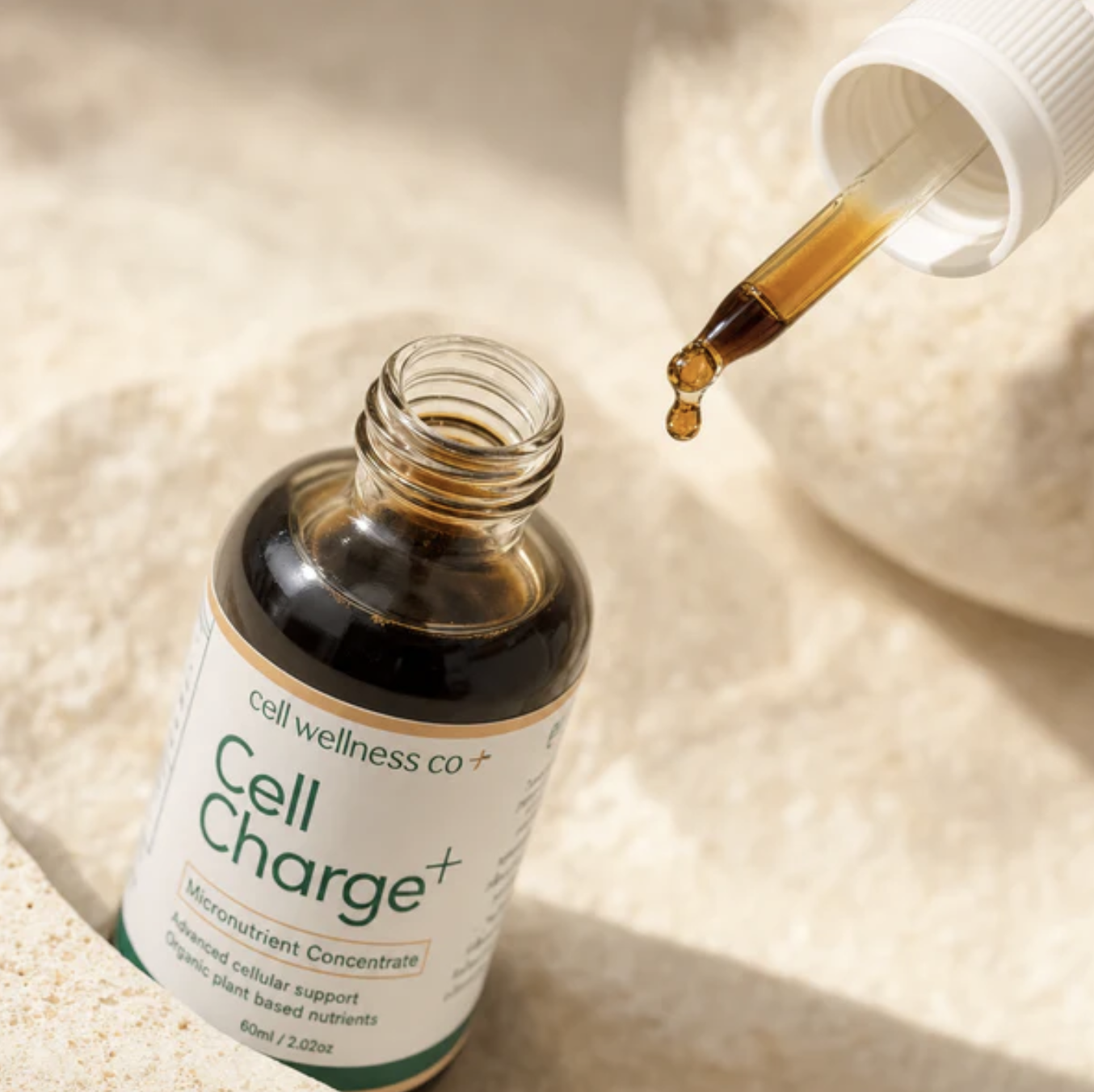
One Australian example of this approach is Cell Charge+, a liquid concentrate produced on the Gold Coast by a family-owned business, Cell Wellness Co. According to the maker, it is drawn from a single ancient mineral deposit and supplies more than 70 naturally occurring trace minerals along with fulvic and humic complexes. The company says a typical serving is three drops a day, taken in water, juice or food.
The company says each batch is put through independent laboratory analysis, and that testing results are available on request. Cell Wellness Co has been operating since 2006 without outside investment, and the concentrate is made in Australia. As with any product in this category, the underlying research on trace mineral supplementation and human health is genuinely mixed, and this article does not attempt to settle it.
The founder behind it

Shannon Ryan, the founder of Cell Wellness Co, has spent close to twenty years working in the natural health and mineral supplementation industry. He is not a familiar name outside his field, and that is largely by design - the business he founded on the Gold Coast has grown by word of mouth for close to two decades.
His interest in soil began, he says, with a simple observation in the mid 2000s: the fruit and vegetables he was buying for his young family did not taste the way the produce of his childhood had tasted. When he began reading the Australian and international agronomy literature on declining mineral density, he found the pattern was already well documented. What was missing, in his view, was a practical way for an ordinary household to put a broad spectrum of trace minerals back into daily food and water without turning it into a project.
The product was built for his own family first. Ryan has three school-aged children, and he is candid that the first bottles of Cell Charge+ were made for their kitchen, not for a shelf. It was only after several years of using it at home, and being asked repeatedly by friends and clients where they could buy something similar, that the concentrate was released commercially.
The formulation itself took years to settle. Ryan sourced from a single ancient mineral deposit, chosen because it predates industrial agriculture and carries a broader trace spectrum than most modern sources. The extraction is chemical-free and slow, done in small batches on the Gold Coast, and every batch is sent for independent laboratory analysis before it leaves the facility. The business has operated since 2006, remains family owned, and has taken no outside investment.
The company's claims about mineral content are supported by independent laboratory analysis, made available on request. This article does not assess health outcomes.
Figures are general and illustrative, not a claim about any specific product outcome.
How it is used
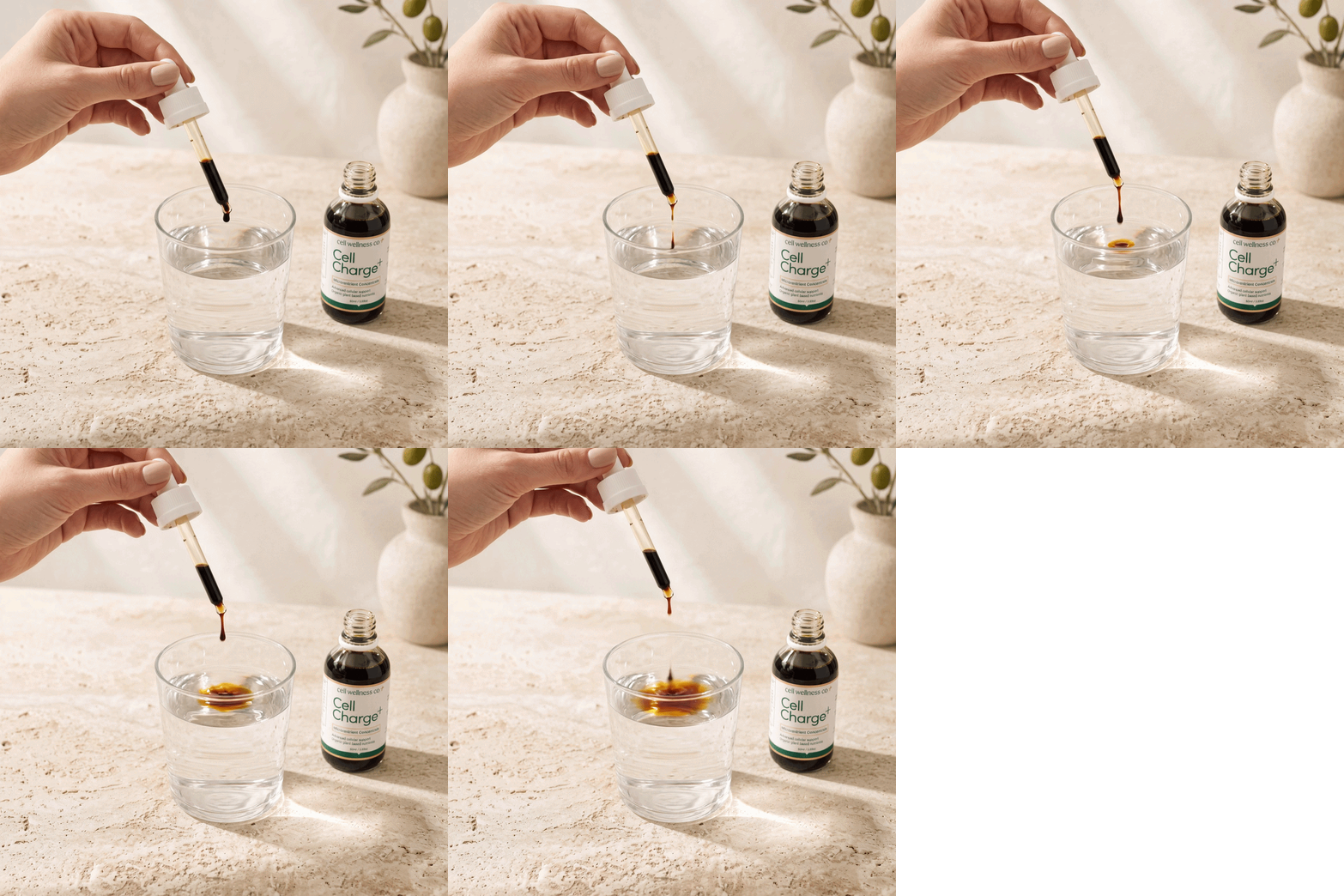
A few drops, straight into whatever you are already drinking or eating. Tasteless once diluted.
A note on reading claims like these
The nutrient-decline literature is not tidy. Some of the widely quoted figures - the dramatic percentages that circulate online about mineral losses in produce - come from small studies, narrow comparisons or methodological choices that other researchers would make differently. Healthy scepticism is warranted, and the honest reading of the evidence is more modest than the loudest headlines suggest. The sensible takeaway is not a number. It is a direction: soil quality shapes food quality, and both have shifted over time. From there, readers can draw their own conclusions, and are encouraged to.
Reader discussion
we've been putting three drops in the water jug in the fridge. everyone drinks from it and nobody has noticed. I forget about half the time honestly but the jug method helps.
the jug idea is good. I keep the bottle next to the kettle, out of sight and I never remember.
same, forgetting is the main problem.
I'm not fully convinced the numbers on soil decline are as dramatic as some articles make out. This one is more measured which I appreciated. Happy to try it but I'll wait and see.
The liquid is very dark, almost black. Once it's stirred through a smoothie you can't see or taste it. Wouldn't try it in plain water for the kids though.
berry smoothie hides it completely. anything pale, less so.
The dropper is fine, no leaks. Bottle is smaller than I expected though. A family of four goes through it faster than you'd think.
three drops in the coffee in the morning. doesn't change the taste at all. that's about all I can say.
the point in the article about standard fertiliser only replacing three minerals was the bit that stuck with me. I hadn't thought about it that way before.
I add it to a stew at the end so it doesn't cook off. Completely tasteless in the finished dish. Useful for the kids.
nice to read something on this topic that isn't yelling at you with percentages. I'm still not fully sold on the whole picture but the soil bit makes sense.
Cell Charge+
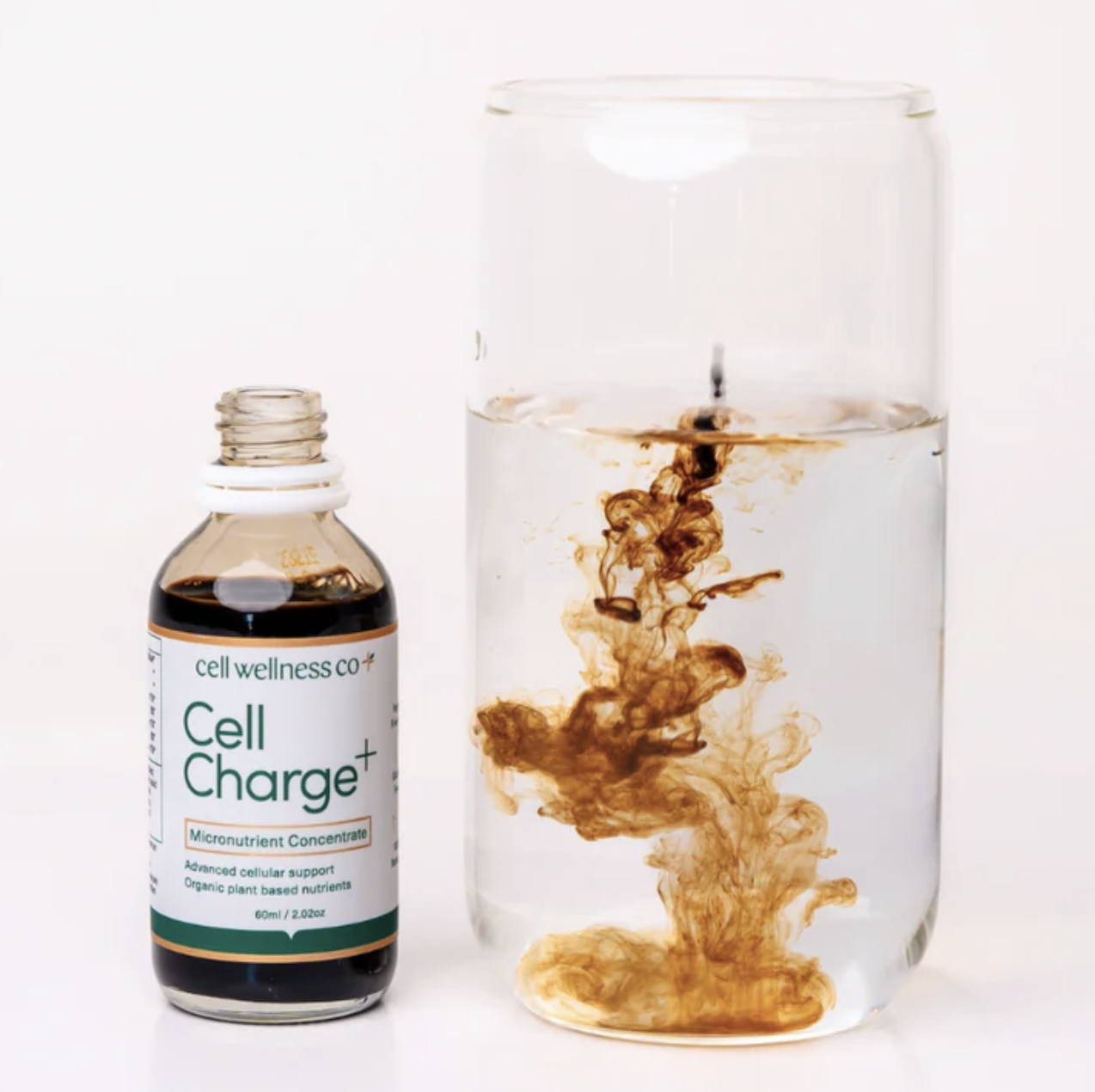
A liquid concentrate of 70+ naturally occurring trace minerals, drawn from an ancient mineral deposit. Three drops a day, in water, juice or food.
- 70+ trace minerals and fulvic complexes
- Tasteless once diluted
- Family-owned, made in Australia since 2006
Always read the label and follow directions for use. This article is educational and not medical advice.